From physical artifact to volumetric digital twin.
The project unfolds across five stages: photographic capture, gaussian splatting in LichtFeld Studio, custom viewer development, recoloring, and final museum integration.
1. Photographic Capture
Capturing the bouquet from every angle.
We photographed the bouquet from many angles, generating the dense visual coverage needed to record its gemstones, metallic surfaces, and delicate botanical structure in detail.
2. Gaussian Splatting Using LichtFeld Studio
Reconstructing the bouquet as a digital twin.
Using LichtFeld Studio, we turned the photographic dataset into a gaussian splatting model that preserves the bouquet's material richness and fine structure while enabling fluid digital viewing.
- Faithful reconstruction The scan retains gemstones, reflections, and botanical detail in a dense splat-based representation.
- Built for movement The resulting model supports continuous navigation and close inspection instead of static documentation alone.
3. Custom Viewer: geosplat Development
Building a viewer for guided storytelling.
We developed our own gaussian splatting viewer, geosplat, and implemented custom features required for this project. The result is a smooth presentation designed specifically for this object.
- Purpose-built viewer engineering geosplat was developed for authored splat-based presentation rather than adapted from a standard 3D viewer.
- Presentation control The viewer supports deliberate movement and visual pacing instead of a generic orbit interface.
- Foundation for museum tailoring Its feature set could be refined directly with the museum team for the final experience.
4. Recoloring
Recoloring the bouquet.
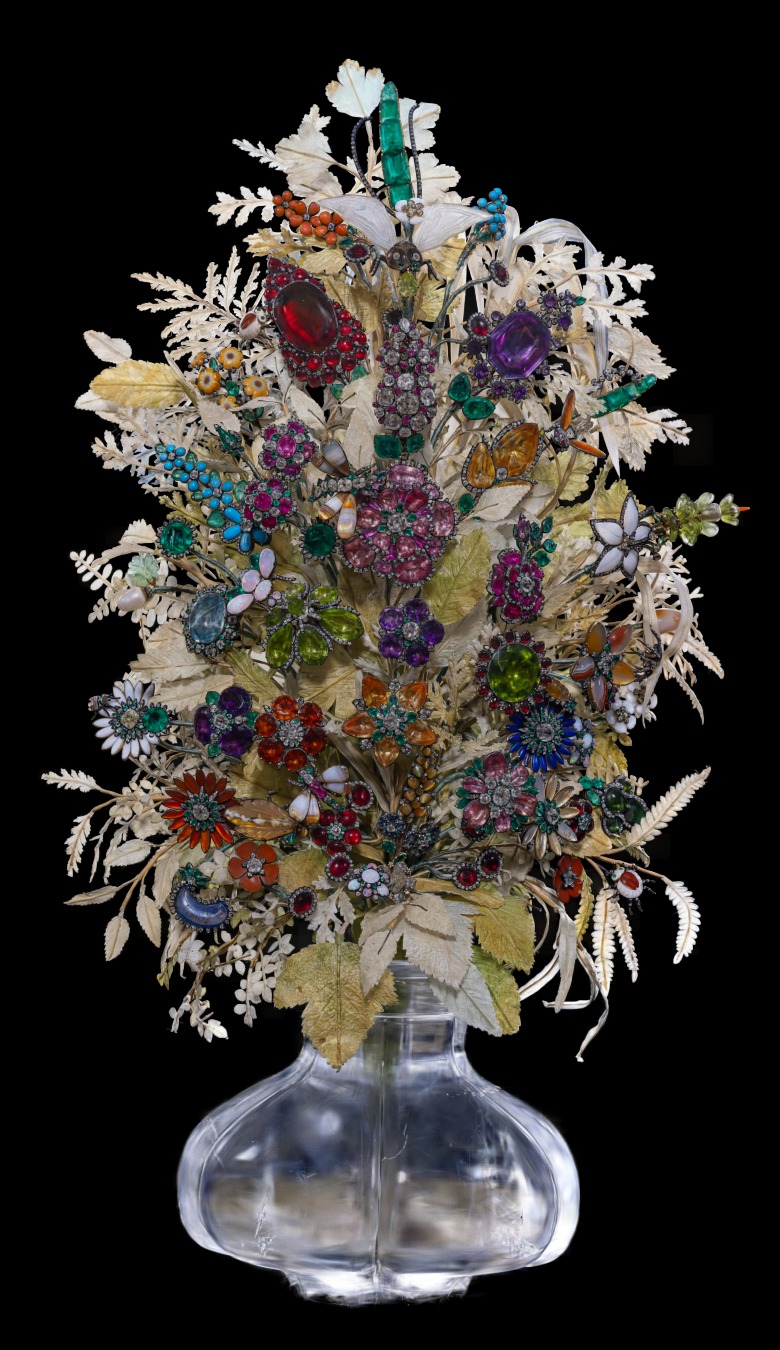
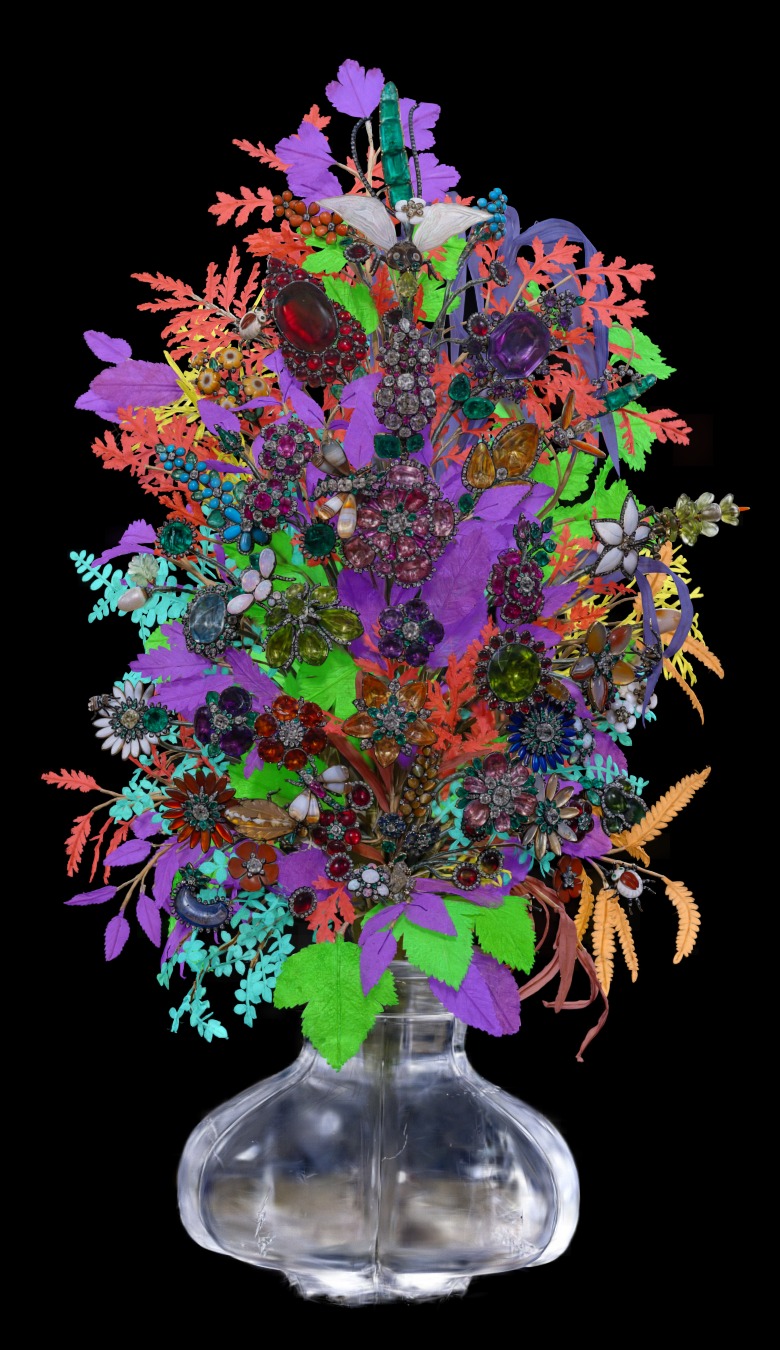
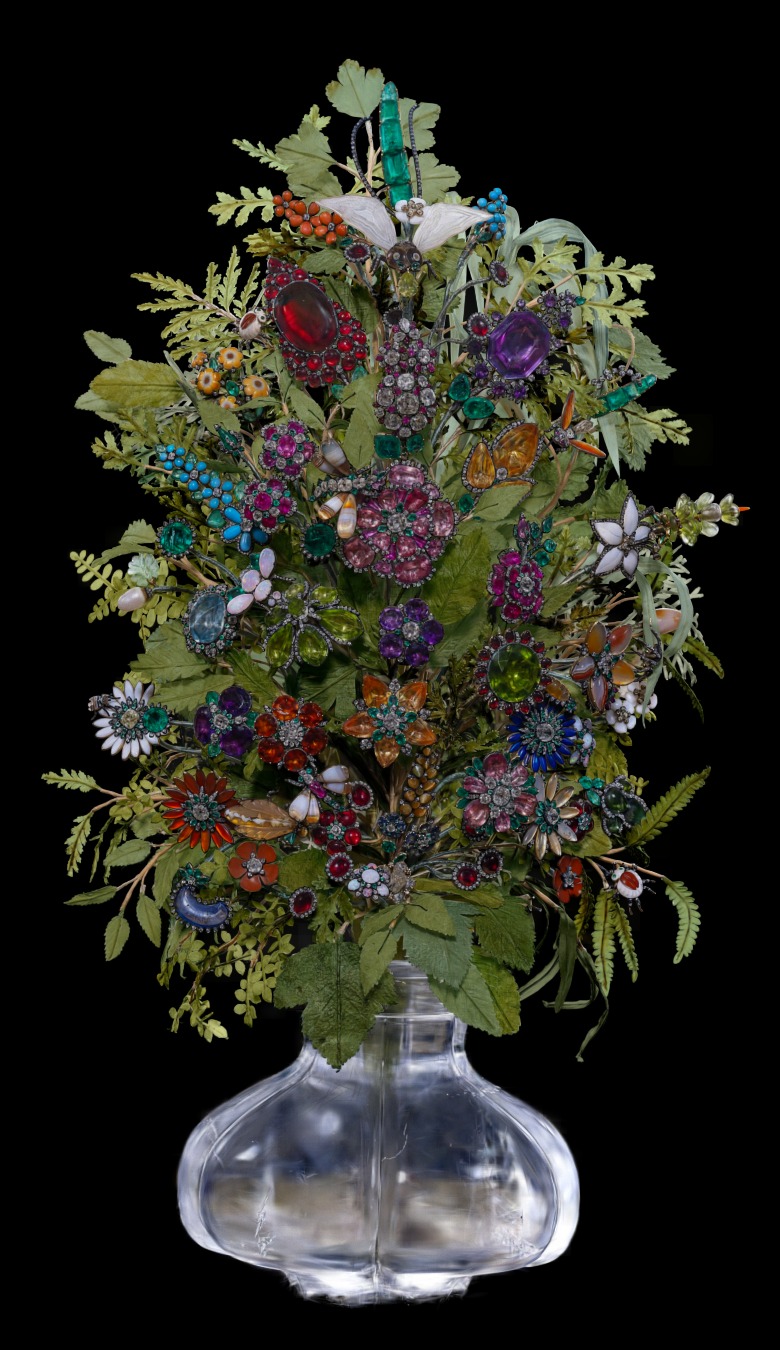
After years of being exposed to sunlight, the color of the leaves remain faded. We built a custom flood-fill brush for gaussian splats that allowed to group all the different types of leaves. Then, Dr. Victoria Kohn, curator of the museum's gem collection, faithfully recolored them using our tools. This made it possible to reconstruct how the bouquet likely appeared centuries ago.
5. Museum Integration
Shaping the final experience with the museum.
In tight collaboration with the Museum of Natural History Vienna, we adapted the viewer into a presentation format suited to the bouquet and its curatorial context.
- Guided camera movement The bouquet is revealed through a composed path.
- Interpretive overlays Labels, depth of field, and vignetting help direct attention toward specific details.
- Curatorial collaboration The final experience was refined with the museum team around both scholarship and storytelling.
Press Appearances and Sources
Further coverage of the project.

